
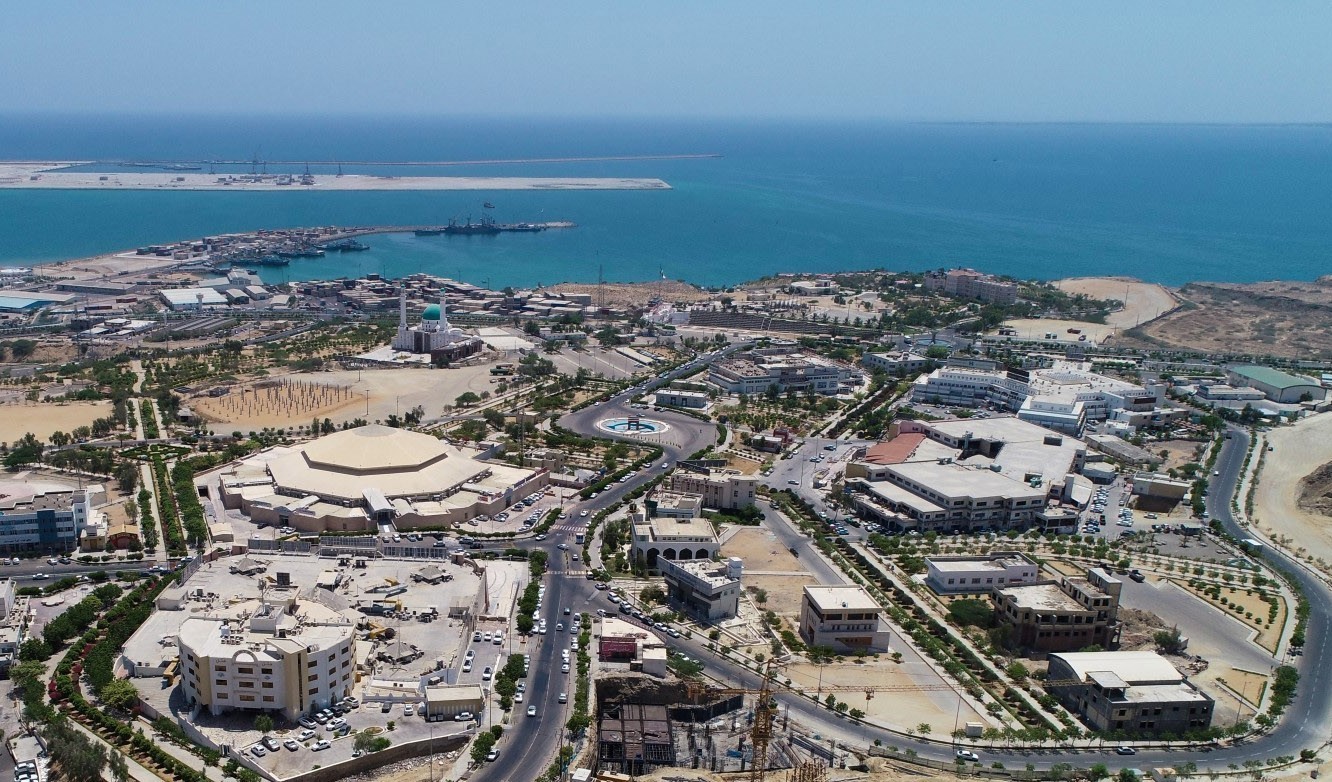
According to the Public Relations and International Affairs Department of the Chabahar Free Zone Organization, citing IRNA, the Economic Cooperation Organization (ECO), whose members include the Islamic Republic of Iran, Pakistan, Türkiye, the Republic of Azerbaijan, Afghanistan, Kazakhstan, Kyrgyzstan, Tajikistan, Turkmenistan, and Uzbekistan, is regarded as one of the region’s most important economic blocs. With a market of more than 500 million people and extensive capacities in energy, transportation, trade, industry, agriculture, and transit, the organization has the potential to play a significant role in the economies of Asia and even the world.
Despite this enormous potential, the level of intra-regional trade among ECO members remains below the organization’s actual capacity. Experts attribute this situation to the lack of integrated transportation networks, weak logistics infrastructure, limited access routes to open waters, and the absence of joint free zones among the member states.
Under such circumstances, the Chabahar Free Zone, with its unique location in southeastern Iran on the coast of the Indian Ocean, could become the missing link in the development of ECO economic cooperation. The region not only provides the shortest route for the landlocked countries of Central Asia and Afghanistan to access open waters, but is also situated at the intersection of major international transportation corridors.
Chabahar: Iran’s Only Oceanic Free Zone
The Chabahar Free Zone is the only oceanic free zone of the Islamic Republic of Iran, an advantage that distinguishes it from the country’s other free zones and gives it a special position in regional economic equations.
Its location on the shores of the Sea of Oman and the Indian Ocean provides direct access to global markets and makes Chabahar the nearest transit route for many Central Asian countries, which have faced geographical constraints in accessing open waters for many years.
Utilizing Chabahar’s capacities could provide numerous benefits to the members of the Economic Cooperation Organization. The most important of these include reducing the cost and duration of goods transportation, diversifying transit routes, enhancing the security of regional supply chains, expanding the exports and imports of Central Asian countries, and transforming Iran into the region’s logistics hub.
Furthermore, Chabahar’s location at the intersection of the International North–South Transport Corridor, the East–West Corridor, and the transit routes of the Economic Cooperation Organization has made it one of the region’s most important transportation nodes. This position could further strengthen connections among Central Asia, the Caucasus, South Asia, and the Middle East.
Chabahar: ECO’s Ocean Gateway and the Link Connecting Central Asia to Open Waters
ECO: An Opportunity to Establish a New Economic Network
Developments in recent years have demonstrated that the future of the global economy will increasingly depend on the development of transportation corridors, logistics networks, and regional cooperation.
Within this context, the Economic Cooperation Organization can also use the capacities of free zones and transit corridors to secure a greater share of global trade.
Chabahar is not merely a port in this regard, but a strategic platform for the development of trade, investment, production, re-export, transit, and regional cooperation. If its infrastructure is completed and joint mechanisms are established among ECO members, this capacity could enhance the organization’s position in the regional and global economy.
The development of Chabahar will not benefit Iran alone; its advantages will extend to all ECO members, as Central Asian countries, Afghanistan, Pakistan, Türkiye, and the Caucasus can connect to global markets through this route at lower cost and within a shorter period of time.
Chabahar: The Starting Point of ECO Economic Integration
An examination of the existing capacities indicates that the Chabahar Free Zone has the potential to become the “Ocean Gateway of ECO.” This title is not merely a slogan, but is founded on the region’s geopolitical, geoeconomic, and transit advantages.
Many economic experts and executives now believe that the time has come for the members of the Economic Cooperation Organization to look beyond national borders and devise joint mechanisms for developing free zones, transportation corridors, and regional investments. Such an initiative could transform Chabahar into the beating heart of ECO trade on the shores of the Indian Ocean.
Chabahar and Gwadar: Two Complementary Free Zones for the Development of ECO Trade
In recent years, as international corridors have gained greater importance and economic powers have competed for control over trade routes, the names of two major ports—Chabahar Port in Iran and Gwadar Port in Pakistan—on the northern coast of the Indian Ocean have attracted increasing attention.
Although these two ports are presented as competitors in some international analyses, from the perspective of regional cooperation, particularly within the framework of the Economic Cooperation Organization, they can play entirely complementary roles. By establishing a coordinated logistics network, they could significantly increase trade capacity among the member states.
The Chabahar Free Zone and Gwadar Free Zone are located less than 120 kilometres apart, and both are situated on the shores of the Sea of Oman and the Indian Ocean. This position provides a rare opportunity to establish one of South Asia’s largest economic and transit hubs.
Rather than competing, a division of responsibilities between these two free zones could facilitate the formation of a chain of port services, transportation, export-oriented industries, goods processing, and joint investment. In addition to Iran and Pakistan, such a model would provide extensive benefits to the other ECO member states.
Under such a model, Chabahar and Gwadar could become the two principal arms of regional trade by coordinating the provision of port services, establishing regular short-distance maritime shipping lines, developing joint production and export chains, coordinating transit services, and attracting joint investment from ECO member states.
Chabahar: ECO’s Ocean Gateway and the Link Connecting Central Asia to Open Waters
Rimdan: The Link Connecting Iran, Pakistan, and ECO Members
Alongside maritime capacities, the Rimdan–Gabd land border also holds a special position in the development of regional economic cooperation.
As the closest land crossing between the Chabahar and Gwadar free zones, this border could become the most important land bridge connecting Pakistan to the transportation network of the Economic Cooperation Organization.
The development of this border will play a decisive role in completing ECO’s transit network. Pakistani goods could be transported through Iran to Türkiye, the Caucasus, and Central Asian countries, while the landlocked countries of Central Asia could gain access to Pakistani ports and the open waters of the Indian Ocean at lower cost and within a shorter period of time.
The development of the Rimdan–Gabd area would make it possible to establish a range of joint infrastructure facilities, including a joint Iran–Pakistan free zone, a joint logistics and warehousing centre, intermodal road and rail terminals, permanent export marketplaces, goods processing and packaging centres, and a joint single-window customs system.
In addition to reducing transportation costs, such infrastructure would facilitate trade, accelerate customs clearance, attract investment, and stimulate economic activity in border areas.
Proposal to Establish an “ECO Zone” in Chabahar and Gwadar
One of the most important proposals presented for the development of regional cooperation is the establishment of an “ECO Zone” in the Chabahar and Gwadar free zones.
Under this proposal, part of the capacity of the two free zones would be allocated to companies and investors from the member states of the Economic Cooperation Organization, thereby creating the organization’s first practical experience of economic integration among its members.
Within this zone, ECO members could benefit from preferential tariffs, facilitated entry for investors, the establishment of joint companies, simplified issuance of business visas, coordinated customs regulations, electronic exchange of commercial documents, and the establishment of dedicated ECO financial and insurance centres.
The creation of such a zone could significantly increase ECO’s share of intra-regional trade, an issue that has been regarded as one of the organization’s principal challenges for many years.
Furthermore, the presence of joint companies, private-sector investors, and export-oriented industries in the zone would provide the foundation for the formation of regional value chains and the expansion of goods re-exports to global markets.
Regional economic analysts emphasize that the future of development in the northern Indian Ocean lies not in competition, but in cooperation among ports and free zones.
Accordingly, instead of competing to attract cargo and investment, Chabahar and Gwadar could divide responsibilities and establish a complementary network, placing their capacities at the service of regional trade development.
Under such circumstances, the Economic Cooperation Organization could also use these two free zones as operational platforms for the development of trade, transit, investment, and economic integration. Such an initiative would benefit not only Iran and Pakistan, but all ECO member states.
Proposal to Establish the First “ECO Free Zone”: A Step Towards Economic Integration Among the Members of the Economic Cooperation Organization
As regional economic cooperation expands around the world, the Economic Cooperation Organization must also implement joint projects and establish transnational infrastructure in order to increase its share of global trade. This process could enter a new phase through the establishment of the first “ECO Free Zone” in Chabahar, Gwadar, and the Rimdan–Gabd border area.
Under this proposal, beyond the establishment of an “economic zone,” the first transnational free zone of the Economic Cooperation Organization would be created with the participation of the member states and centred on the Chabahar and Gwadar free zones. This zone could become a centre for trade, investment, production, innovation, and logistics services across the organization’s member states.
The formation of such a zone could provide a new model of economic integration in the region—a model that would transform ECO’s potential capacities into actual capacities by reducing trade barriers and coordinating economic policies.
Chabahar: ECO’s Ocean Gateway and the Link Connecting Central Asia to Open Waters
Features of the ECO Free Zone
Under the proposed plan, the ECO Free Zone could have a structure different from conventional free zones and could be administered with the direct participation of the member states.
Its most important features could include coordinated economic management, joint investment by ECO members, harmonized trade regulations, a single investment window, a regional development bank, a joint ECO investment fund, commercial arbitration centres, joint industrial parks, innovation and technology centres, and a goods re-export hub.
In addition to reducing bureaucracy and facilitating investment processes, the implementation of such a model would provide the conditions for major regional and international companies to establish a presence.
Furthermore, the establishment of joint industrial parks would strengthen technology transfer, joint production, and the export of higher-value-added goods among the member states.
A Transformation in ECO’s Intra-Regional Trade
One of the most important objectives of establishing the ECO Free Zone is to increase trade among the member states. Although ECO is considered one of Asia’s most important economic blocs in terms of population, natural resources, energy, consumer markets, and geographical position, the volume of trade among its members remains far below its actual capacity.
The establishment of a joint free zone could significantly increase intra-regional trade by removing many of the existing barriers.
The development of logistics infrastructure and the harmonization of customs regulations would also reduce goods transportation costs and shorten the time required to access target markets.
The establishment of the ECO Free Zone in Chabahar and Gwadar would have extensive economic effects for the member states.
The most important outcomes of implementing this plan would include increased intra-regional trade, reduced logistics costs, the attraction of foreign investment, the development of export-oriented industries, the creation of employment opportunities in border areas, increased transit revenues for Iran and Pakistan, the development of port and logistics services, and stronger economic ties among the organization’s members.
The establishment of this free zone could also provide the conditions for developing processing and packaging industries, re-export activities, knowledge-based industries, and financial and insurance services, thereby generating greater added value for the economies of the member states.
The importance of the ECO Free Zone is not limited to the economy, as the implementation of this plan would also have significant geopolitical consequences.
Strengthening the position of the Economic Cooperation Organization in the Eurasian economy, reducing the dependence of landlocked countries on limited routes, deepening strategic cooperation between Iran and Pakistan, establishing a sustainable connection among Central Asia, South Asia, and the Indian Ocean, and increasing the economic bargaining power of ECO members in global trade are among the most important geopolitical effects of this initiative.
At a time when many countries are seeking alternative routes for international trade, Chabahar could become one of the most important links connecting the economy of Central Asia to open waters.
Requirements for Realizing This Vision
Despite its numerous capacities, the realization of this plan requires close cooperation among the governments of ECO member states, particularly Iran and Pakistan.
The most important measures that could provide the foundation for realizing this vision include establishing a joint working group involving Iran, Pakistan, and the ECO Secretariat; drafting an agreement for a joint free zone; completing the infrastructure of the Rimdan–Gabd border; connecting the Chabahar railway to the national and regional rail networks; developing road corridors between Iran and Pakistan; establishing smart customs systems; designing joint investment incentives; and establishing an ECO commercial arbitration centre in Chabahar.
Experts emphasize that, in addition to infrastructure investment, the implementation of this programme requires legal, customs, and banking coordination among the member states so that trade and investment can be conducted with the fewest possible barriers.
Chabahar: The Future Centre of ECO Economic Integration
Overall, its geopolitical capacities, exceptional oceanic position, access to international corridors, and proximity to Gwadar Port have made Chabahar one of the most important candidates for hosting the first transnational free zone of the Economic Cooperation Organization.
If a joint Rimdan–Gabd free zone, an “ECO Zone” in Chabahar and Gwadar, and ultimately an “ECO Free Zone” involving the organization’s members are established, ECO could become one of Asia’s most important economic, transit, and investment blocs. This path would not only transform regional trade, but would further enhance the position of the Islamic Republic of Iran and the Chabahar Free Zone in the region’s future economic equations.
Chabahar: ECO’s Ocean Gateway and the Link Connecting Central Asia to Open Waters
The Future of Regional Development Depends on Cooperation, Not Competition
The Chairman of the Board and Chief Executive Officer of the Chabahar Free Zone Organization said in an interview with an IRNA reporter on Saturday that the region, with its exceptional geopolitical and geoeconomic position, has the potential to become the ocean gateway of the Economic Cooperation Organization. This status would not only strengthen regional trade and transit, but would also provide the foundation for the establishment of ECO’s first joint free zone.
Mohammad Saeid Arbabi, while outlining the outlook for the development of regional cooperation, emphasized the need to move beyond a competitive approach among the region’s ports and advance towards economic integration.
In response to a question about why Chabahar is referred to as the “Ocean Gateway of ECO,” he said: “The Chabahar Free Zone enjoys a rare geopolitical and geoeconomic advantage. It is the only oceanic port of the Islamic Republic of Iran and is located at the southernmost point of international transportation corridors.”
The CEO of the Chabahar Free Zone Organization added: “If we look at the map of the Economic Cooperation Organization, a significant number of its member states, particularly the Central Asian countries, require reliable routes to gain sustainable, short, and economical access to open waters. Chabahar can fulfil this strategic role.”
He stated: “Chabahar can become ECO’s ocean gateway—a gateway that will facilitate not only trade, but also investment, production, exports, transit, and economic cooperation among the organization’s members.”
Chabahar and Gwadar: Complementary to One Another
Referring to certain analyses concerning competition between Chabahar and Gwadar, Arbabi said: “A competitive approach limits the region’s actual capacities. Rather than being rivals, Chabahar and Gwadar can serve as two complementary free zones.”
He added: “Both regions are located on the shores of the Sea of Oman and the Indian Ocean and are geographically close to one another. This proximity provides a rare opportunity to establish a major logistics and trade hub in South Asia.”
The CEO of the Chabahar Free Zone Organization noted: “Under such a model, an intelligent division of responsibilities could be defined between the two free zones, covering areas ranging from port services and transit to export-oriented industries, logistics, goods processing, and joint investment.”
According to him, cooperation between Chabahar and Gwadar would benefit not only Iran and Pakistan, but all members of the Economic Cooperation Organization.
Rimdan: The Land Link Between Iran and Pakistan
Referring to the capacities of the Rimdan Detached Zone, Arbabi continued: “The Rimdan–Gabd land border should be regarded as the land link between Iran and Pakistan and as Pakistan’s connecting bridge to the ECO member states.”
He added: “If this border is transformed into a joint free zone equipped with logistics, customs, and commercial infrastructure, ECO’s transportation network will effectively be completed.”
The CEO of the Chabahar Free Zone Organization stated: “Establishing logistics centres, joint warehouses, export terminals, a single-window customs system, and facilitating the movement of goods in this area could reduce transportation costs and increase trade among ECO members.”
He emphasized: “Rimdan–Gabd has the potential to become one of the region’s most important transit nodes.”
Regarding the proposal to establish an “ECO Zone” in the Chabahar and Gwadar free zones, Arbabi said: “Today, many regional organizations have established joint special economic zones to develop trade, and the Economic Cooperation Organization can also take an important step towards economic integration by creating an ECO Zone.”
He added: “Within this zone, companies from ECO member states could benefit from free-zone incentives, customs facilities, and joint banking, insurance, and logistics services.”
The CEO of the Chabahar Free Zone Organization continued: “It would also make possible the formation of regional value chains, joint production, and re-exports to global markets. This initiative could significantly increase ECO’s share of intra-regional trade.”
The Time Has Come to Establish an ECO Free Zone
Emphasizing the need to establish a dedicated free zone for the Economic Cooperation Organization, he said: “Our proposal is that, beyond establishing an economic zone, the first ‘ECO Free Zone’ should be created in Chabahar and Gwadar. This zone could be administered with the participation of the members of the Economic Cooperation Organization and become a regional centre for trade, investment, production, innovation, and logistics services.”
According to Arbabi, the establishment of an ECO Free Zone would send a clear message regarding the determination of the member states to move towards economic integration and would provide the foundation for implementing joint projects and establishing investment funds, financial centres, multinational companies, and joint industrial parks.
Benefits for ECO Members
Regarding the benefits of this plan for ECO members, he said: “Central Asian countries could gain access to the Indian Ocean through Chabahar and Iran’s transportation network at lower cost and within a shorter period of time.”
The CEO of the Chabahar Free Zone Organization added: “Pakistan, meanwhile, would be connected through the Rimdan–Gabd land border to the transit networks of Iran, Türkiye, the Caucasus, and the other ECO members.”
He emphasized: “Consequently, all members would benefit from increased trade, reduced transportation costs, diversified transit routes, and expanded investment.”
Regarding the measures required to implement the plan, Arbabi said: “Achieving this objective requires close cooperation among the governments of the ECO member states, particularly Iran and Pakistan.”
He said: “Completing transportation infrastructure, developing the Rimdan–Gabd border, harmonizing customs regulations, facilitating investment, establishing a single trade window, developing rail and road routes, and designing joint incentives are among the necessary measures.”
The CEO of the Chabahar Free Zone Organization also proposed that the ECO Secretariat establish a specialized working group and place the development of a legal framework for creating the ECO Zone and the ECO Free Zone on its agenda.
Chabahar: ECO’s Ocean Gateway and the Link Connecting Central Asia to Open Waters
Stating that the future of regional development depends on cooperation rather than competition, he noted: “If Chabahar is established as ECO’s ocean gateway, Gwadar as a complementary partner, Rimdan–Gabd as the land bridge connecting the two countries, and the ECO Free Zone as a symbol of economic integration, the Economic Cooperation Organization could become one of Asia’s most important hubs for trade, transit, and investment.”
Arbabi emphasized: “The Chabahar Free Zone is prepared to draw upon its unique capacities and play a pivotal role in realizing this vision.”
According to IRNA, the Rimdan border, located within Dashtiari County at a strategic point in southeastern Sistan and Baluchestan Province, provides Iran’s shortest land route to Pakistan’s southern provinces. Because it lies within a geographical area encompassing approximately 37 percent of the world’s population—Pakistan, China, and India on its two sides—the border plays a decisive role in commercial exchanges, local movement, and the region’s economic development.
The Rimdan border marketplace and border area are located 50 kilometres from the main Chabahar–Rask road, 120 kilometres from Chabahar, and 70 kilometres from Gwadar, Pakistan.
The Chabahar Free Zone covers an area of 82,000 hectares in southeastern Iran along the Makran coast. In 1398, with the approval of the Islamic Consultative Assembly, the city of Chabahar, Shahid Beheshti and Shahid Kalantari ports, and 5,000 hectares of territory connected to the Iran–Pakistan border point, designated as the Rimdan Detached Zone, were added to the Chabahar Free Zone.


